It’s absolutely true that patience is not just a virtue, but a tool. A powerful one. It has unlimited value and unlimited use, and it quietly shapes personal growth from the very first day we enter this terrifying and beautiful world. Patience molds us. It teaches restraint, perspective, and discipline, even when everything in us wants immediate relief or gratification.
Yet patience is also one of the hardest qualities to develop, let alone master. Most of us struggle to display it consistently, especially under pressure. For some, the inability to practice patience ends up costing far more than money or material things. It costs freedom. It costs relationships. It costs years of life that can never be returned. If you are someone who has lost something priceless due to impatience, then you already understand that patience is not an abstract concept. It is a lesson earned through consequence.
Patience and insight go hand in hand. When patience is present, vision becomes clearer. It allows us to see beyond the immediate moment and imagine the long game. The long game is the ability to problem-solve before a problem compounds. It is the ability to pause long enough to ask, “Where does this choice actually lead?” Take a simple but harsh example. If you rob a gas station, then use that money to get high, you create a cycle with only two possible outcomes. Incarceration or death. There is no third option hiding down the road. And those outcomes do not affect only the person making the choice. They ripple outward, damaging families, children, communities, and futures that never even had a chance to form.
This isn’t theory. This is experience speaking. Patience creates space between impulse and action. In that space, perspective lives. When we allow ourselves even a brief moment to step back and see the bigger picture, we give ourselves a fighting chance at a better outcome. A calmer life. A more stable future. A path that doesn’t require us to keep starting over from zero.
The long game is not about perfection. It’s about choosing progress over repetition. It’s about understanding that short-term relief often creates long-term pain, while short-term discomfort can build long-term freedom. When we slow down enough to see where our choices lead, life doesn’t just get better. It gets clearer. And clarity changes everything.
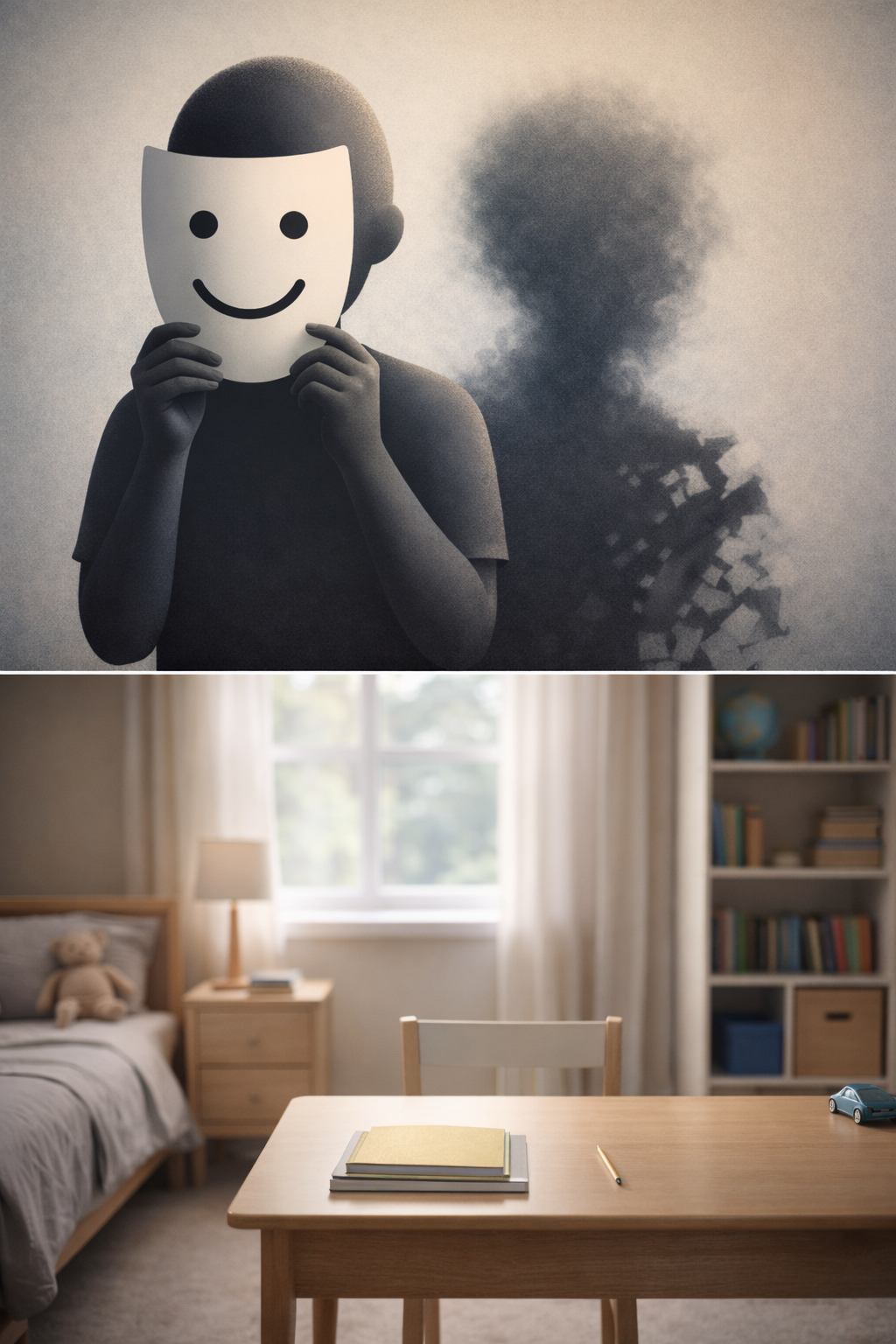
Modern child welfare and family court systems rely heavily on adult presentation. Calm demeanor, articulate speech, and surface compliance are often interpreted as indicators of stability and safety. However, trauma psychology consistently demonstrates that external composure is not a reliable measure of internal regulation or emotional safety.
Children are affected not by how adults perform in controlled environments, but by how those adults respond during stress, frustration, and loss of control. Presentation captures moments. Trauma forms in patterns.
According to Gabor Maté, many individuals learn early to suppress emotion as a survival strategy. This emotional suppression can appear as calmness, self-control, or maturity, while masking unresolved trauma that surfaces in private or high-stress situations.
Systems that prioritize presentation over impact risk confusing emotional containment with emotional health.
Why Presentation Is a Poor Proxy for Safety
Trauma-informed research shows that some of the most harmful relational dynamics occur in environments that appear orderly from the outside. Emotional harm often leaves no visible marks and rarely presents itself during formal observation.
Caregivers who are emotionally avoidant, dissociated, or rigidly controlled may:
maintain composure in professional settings
communicate calmly with authority figures
follow rules precisely
suppress visible emotional reactions
None of these behaviors guarantee emotional safety for a child.
In contrast, protective caregivers who are distressed, outspoken, or emotionally reactive may be flagged as unstable, despite responding to genuine fear or concern for a child’s wellbeing.
This creates a structural bias: those who perform calmness are trusted; those who express distress are scrutinized.
Impact on Children
When systems rely on presentation, children are placed in an impossible position.
Children harmed by emotionally controlled caregivers often learn:
that speaking up will not be believed
that fear must be hidden
that safety depends on silence
that adults value order over truth
Over time, this can result in:
emotional numbing or dissociation
hypervigilance around authority
difficulty trusting caregivers
increased risk of anxiety, depression, and later substance use
Gabor Maté has repeatedly emphasized that trauma is not defined solely by what happens to a person, but by what happens inside them when their emotional reality is not acknowledged or protected.
A child who is not believed learns to adapt by disappearing.
Why Distressed Parents Are Often Misjudged
Protective parents navigating fear, loss, or perceived danger frequently show visible emotional responses. Trauma science recognizes these reactions as stress responses, not character defects.
However, systems often misinterpret:
urgency as manipulation
emotional expression as instability
persistence as interference
This mislabeling can lead to reduced trust in the very caregivers who are most attuned to a child’s distress.
The result is an inversion of safety: the calm adult is trusted, the distressed adult is doubted, and the child’s symptoms are minimized.
Alternatives: Measuring What Actually Matters
1. Longitudinal Assessment Over Snapshot Observation
Safety should be evaluated across time and contexts, not single interactions. Patterns of behavior, not momentary composure, reveal emotional risk.
2. Weighting Child Symptoms Over Adult Demeanor
Nightmares, anxiety, regression, and fear-based compliance are stronger indicators of harm than an adult’s ability to remain calm during interviews.
3. Trauma-Informed Evaluator Training
Professionals must be trained to recognize:
emotional suppression
dissociation
performative compliance
charm as a defense mechanism
These are trauma adaptations, not evidence of health.
4. Differentiating Distress From Danger
Emotional expression in caregivers should be evaluated in context. Distress does not equal instability. Silence does not equal safety.
Core Truth
Calm is not the same as regulated. Controlled is not the same as safe. And children should never be expected to suffer quietly so adults can look composed.
Systems that value presentation over impact risk protecting appearances rather than children.
Site References / Sources
Primary Trauma & Psychology Sources
Gabor Maté
In the Realm of Hungry Ghosts
The Myth of Normal
Lectures on trauma, emotional suppression, and addiction as adaptation
Bessel van der Kolk
The Body Keeps the Score
Research on trauma, dissociation, and nervous system regulation
Stephen Porges
Polyvagal Theory and nervous system states
Research on threat responses, shutdown, and social engagement
Fear-based compliance occurs when children obey not because they understand boundaries, but because their nervous system has learned that resistance leads to emotional or physical threat. This kind of “good behavior” is often praised by adults and institutions because it is quiet, predictable, and easy to manage.
Trauma psychology shows that fear suppresses outward behavior while intensifying internal stress. According to Gabor Maté, children adapt to unsafe environments by disconnecting from their authentic emotional responses. Obedience becomes a survival strategy, not a sign of wellbeing.
When compliance is driven by fear, learning does not occur. The brain shifts out of the prefrontal cortex, where reasoning and integration happen, and into survival mode. In that state, children memorize rules without understanding them and suppress emotions instead of regulating them.
Impact on Children Fear-based compliance produces children who appear functional while carrying invisible harm. Common long-term effects include: Chronic anxiety and hypervigilance Nightmares and sleep disturbances Excessive people-pleasing and fear of authority Emotional shutdown or dissociation Difficulty identifying or expressing feelings Increased risk of depression and substance use in adolescence or adulthood.
These children often receive praise for being “easy,” “mature,” or “well-behaved.” In reality, they are over-adapted. Their nervous systems have learned that safety comes from disappearing. As Gabor Maté explains, addiction and self-destructive behaviors later in life frequently trace back to early environments where authentic emotion was unsafe to express. Fear-based compliance teaches children that their feelings are liabilities rather than signals.
Why Systems Misread Fear as Safety Institutions often equate compliance with stability because it reduces visible disruption. A quiet child is assumed to be coping well. A calm household is assumed to be healthy. This creates a dangerous blind spot: Children who freeze are overlooked Distress that does not disrupt adults is minimized Emotional harm is missed because it lacks spectacle
Children rarely disclose fear directly when the source is a caregiver. Instead, fear shows up somatically through stomach aches, headaches, sleep problems, regression, or sudden behavioral changes. When systems ignore these signs, fear becomes invisible.
Alternatives: What Safety Actually Looks Like
1. Measuring Regulation, Not Obedience True safety is reflected in a child’s ability to: express disagreement without fear recover emotionally after conflict ask for help show age-appropriate emotional range Evaluations should assess emotional flexibility and recovery, not silence.
2. Child-Centered Emotional Assessments Children should be evaluated by trauma-trained clinicians who understand how fear manifests without words. Emotional safety cannot be assessed through yes-or-no questions or surface behavior alone.
3. Caregiver Accountability for Emotional Climate Adults must be evaluated not only on rule enforcement, but on: tone predictability repair after conflict willingness to tolerate a child’s emotions Fear decreases when children know mistakes will not lead to emotional retaliation.
Core Truth A child who is safe will sometimes cry, argue, resist, and express anger. A child who is afraid will comply. Silence is not peace. Compliance is not consent. And fear should never be mistaken for safety.
4. Repair as a Requirement, Not a Suggestion When discipline causes distress, repair must follow. Repair restores safety and teaches accountability. Without it, fear accumulates.
5. Oversight That Values Child Voice Children must be allowed to express discomfort without being labeled disloyal, coached, or manipulative. Safety increases when children learn that truth does not cost connection.
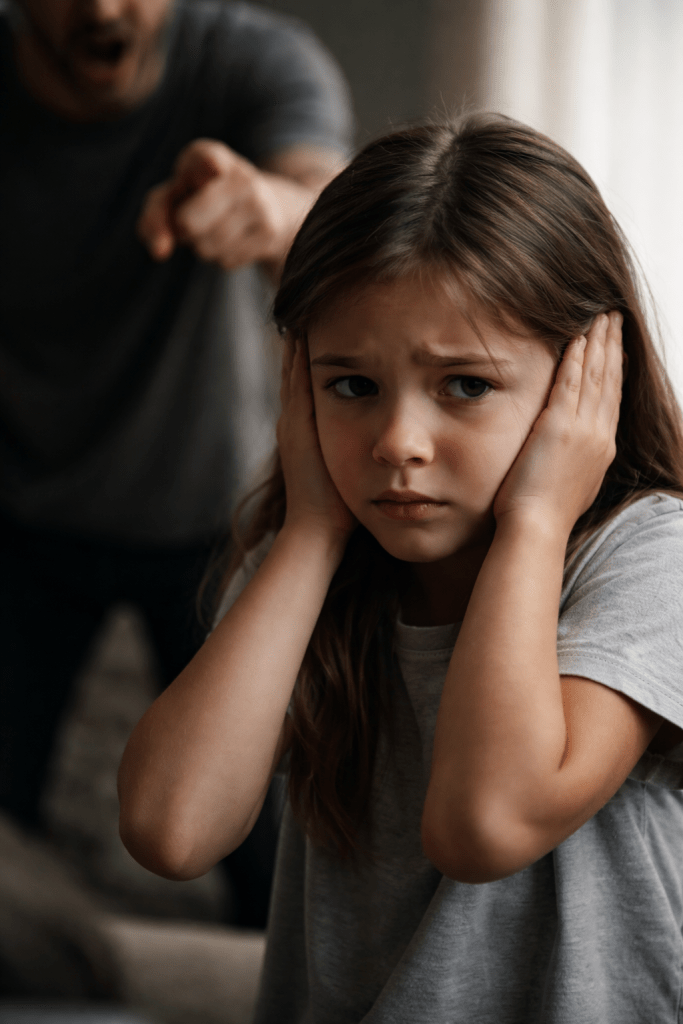
Discipline is meant to teach regulation, responsibility, and repair. When it is driven by uncontrolled anger, frustration, or emotional overflow, it stops being corrective and becomes harmful. Trauma research consistently shows that children do not learn emotional regulation from dysregulated adults.
According to Gabor Maté, children absorb the emotional state of caregivers more than the words they hear. When a caregiver disciplines while emotionally flooded, the child’s nervous system prioritizes survival over learning.
Impact on Children
Anger-based discipline produces:
• Hypervigilance •Nightmares and sleep disturbances •Fear-based compliance mistaken for “good behavior” •Emotional shutdown or explosive behavior later in life •Children raised under unpredictable emotional responses often learn that safety depends on reading moods, not understanding boundaries.
What Can Replace Anger-Driven “Discipline”
1. Mandatory Emotional Regulation Assessment for Caregivers
What it is: Before a caregiver’s disciplinary methods are evaluated, their capacity to self-regulate under stress should be assessed by a trauma-informed professional. This is not a character test. It’s a nervous system evaluation.
Why it matters: Discipline delivered while emotionally flooded cannot be corrective. Research consistently shows that dysregulated adults transmit stress biologically through tone, posture, facial expression, and unpredictability. Gabor Maté emphasizes that children internalize the emotional state of caregivers more deeply than verbal instruction. When adults lack regulation, children learn fear, not values.
How it could be implemented: Standardized screening for emotional reactivity, impulse control, and stress tolerance Required before granting unsupervised disciplinary authority in high-conflict cases Used to determine supports, not punishment
Impact: This shifts focus from “did the parent mean harm” to “does the parent have the capacity to discipline safely.”
2. Distinguishing Discipline From Emotional Discharge
What it is: Systems must explicitly separate discipline from emotional discharge.
Discipline: is planned proportional consistent followed by repair
Emotional discharge: occurs during frustration or loss of control is unpredictable escalates centers the adult’s emotions
Why it matters: Many abusive dynamics are misclassified as “strict parenting” because intent is emphasized over impact. Children cannot differentiate between “I’m being corrected” and “I’m being emotionally overwhelmed by an adult.” Their nervous system only registers threat.
How it could be implemented: Evaluators trained to ask when discipline occurs, not just how Required documentation of post-discipline repair Clear criteria defining when discipline crosses into emotional harm
Impact: This removes ambiguity that allows anger to masquerade as authority.
3. Trauma-Informed Parenting Education Focused on Co-Regulation
What it is: Parenting education that teaches co-regulation rather than control. Co-regulation means: the adult regulates themselves first the child borrows calm from the adult’s nervous system boundaries are enforced without fear
Why it matters: Children develop self-regulation through repeated experiences of being calmed, not commanded. Gabor Maté notes that emotional dysregulation in adulthood often originates from childhood environments where emotions were punished instead of guided.
How it could be implemented: Mandatory trauma-informed parenting courses when emotional harm is suspected Skills-based training, not compliance-based classes Ongoing support rather than one-time completion
Impact: This reduces harm without removing children or criminalizing parents who are willing to change.
4. Child Symptom Patterns as Primary Evidence
What it is: Shift evaluations from adult narratives to child symptom patterns.
Symptoms include: nightmares regression anxiety hypervigilance emotional shutdown fear of disclosure
Why it matters: Children often cannot articulate abuse directly, especially when the source is a caregiver. Their bodies speak instead. Behavioral silence is often misread as stability. Trauma science shows it is frequently a sign of learned helplessness.
How it could be implemented: Longitudinal tracking of child emotional health Greater weight given to patterns over time Clinician-led interpretation, not investigator assumption
Impact: This centers child wellbeing rather than adult performance.
5. Built-In Repair and Accountability Requirements
What it is: Any disciplinary intervention that causes emotional distress must be followed by documented repair. Repair includes: acknowledgment of harm emotional reassurance restoration of safety validation of the child’s feelings
Why it matters: Trauma is not caused solely by harm, but by harm without repair. Children can tolerate mistakes from caregivers when those mistakes are acknowledged and repaired. They are damaged when harm is denied or justified.
How it could be implemented: Repair plans as part of parenting oversight Evaluation of accountability, not just rule-following Consequences for refusal to engage in repair
Impact: This replaces power-based parenting with responsibility-based parenting.
6. Neutral, Trauma-Trained Oversight Instead of Performance-Based Monitoring
What it is: Oversight conducted by trauma-trained professionals who observe real-world interactions, not staged compliance.
Why it matters: Anger-driven discipline rarely appears during formal observation. It emerges during stress, fatigue, or frustration. Systems that rely on brief observations reward parents who can perform calmness temporarily. How it could be implemented: Multiple observation contexts Input from therapists, teachers, and visitation supervisors Reduced reliance on single-point assessments
Impact: This protects children from harm that hides behind composure.
Why These Alternatives Matter
These approaches: •protect children without default removal •reduce long-term trauma and addiction risk •hold caregivers accountable without criminalization •remove incentives for emotional suppression and performance
Most importantly, they acknowledge a core truth systems resist: •Children do not need perfect parents. •They need regulated ones.
Constantly living in fear of what can happen, will ruin what is happening. I know this too well. Because I’m doing it.
Abandonment Issues, heard the term? It typically happens when a caregiver or parent doesn’t give the child enough attention or attentive behaviors the child needs. Traumatized by life, or the things people have done to them.. tricky thing is, over time the child turns to an adult, having learned these patterns of how their caregivers “lack of” has always been. While in romantic or platonic relationships, when the same patterns arise they automatically recognize, the overwhelming anxiety and fear sets in. These people may also exhibit behaviors that push people to leave so they’re never surprised by the loss.
Many who suffer with this issue often find themselves fearing real intimacy, cycling through relationships in order to avoid heartache. When they find someone, the sometimes become irrational, self sabotaging themselves to leave. Many find themselves staying in unhealthy relationships simply because they don’t want to be alone. Last but not least, WE NEED CONSTANT REASSURANCE.
Everyone has or will leave. That’s how it’s always been. Unfortunately, there’s no cure for this. It’s a form of overwhelming anxiety. You either learn who to hold on to and who to let go. I wish it was as easy as just trusting your words, but when actions follow.. we learn, we “wall up” push you to leave, or we leave. It’s not simple or easy for anyone involved. It takes Trust, Communication, and Actions.
“I give anyone a chance, but once you come at me left, then my perception of you has changed for life. Because You didn’t have to do me like you did. And you know I’m 100. But you did that.” -Kevin Gates
Dealing with postpartum depression and anxiety has to be one of the hardest things I’ve ever had to handle. This coming from the 30 something year old PTSD ridden, recovering addict. I never thought I could feel so defeated, but driven to survive. Before I would have tried to throw in the towel. I haven’t relapsed either. The thoughts are there. I’m battling something so unfamiliar, fighting so hard everyday. Having a baby brought back unwanted feelings and memories, that never effected me before.
I have to say, with every depressive moment there comes a Manic day where I accomplish more than I imagined. Reason for this, I study and put my studies into actions. I don’t read for my health, but I do. Without the knowledge I’m teaching myself, to handle these episodes, I wouldn’t be able to come on and write. Fighting to survive an invisible enemy, no one understands, is definitely a subject I need to focus on. Knowledge is all I have and the teachings of those before me or with me.
I need to find peace and love within myself again, so I can beat every episode efficiently. Without the proper tools, I’ll just keep fighting and ill never start living for happiness. It’s not a dream, it’s a goal I have set for myself for my future. My actions henceforth must provide accomplishments toward this goal. If you know someone battling these invisible diseases, just show support. The more you know…
Some tips for those supporting the mother’s, make it about her again.
She needs to know she is loved and cared for. Appreciated on every level. Caring. Growing. Nurturing… all the things, need to be recognized. Without her this wasn’t possible!
Stop trying to fix her, and just help. That’s it.
Offer to go with her to appointments, take responsibility for the things she has to do. Ask the doctors questions. Show Initiative!
Stop asking what you can do, and just do it. Dishes piled up, wash them. Laundry gathered, wash it. It’s not hard to please women. Basic things like chores around the house. Cooking dinner. Ordering flowers for no reason.
Celebrate her success, she needs the reassurance her life matters. Even if it’s only as simple as figuring out how to reprogram a remote.
Look outward for your own support, close relative or friend of hers. Looking out for her can take its toll on you.
Postpartum support comes in many forms. Just ask for help. For the both of you. You’ll need it.. because this sneaky condition that effects mother’s after childbirth. Taking its toll on her, baby and others. Overwhelming and isolating, don’t be ashamed. Be there without judgment. These feelings are simply out of our control.
For the love of everything holy, please do not try to “one-up” someone’s mental health. Everyone has something going on, and this isn’t a dick measuring contest!
We need to be understanding! Use your listening ears. Explain why you understand with a similar story or a shared feeling. But never say, I’ve been through worse. Or, that’s nothing in comparison. Fuck you dude.
What happened to compassion and empathy, Shit even, sympathy?! Where did we forget what was instilled on our child minds to love everyone no matter who or what? I’m asking a lot of questions because, I’d like to figure out at what age do we just stop sharing. Some may never learn these simple human edicts, morally speaking.
Can we relearn this? Yes! Listen, share, understand. How can you go around pretending you know everything, when you may never have been where they stood? Step back.
Stop competing like this world has told us we have to, to succeed. Successful individuals aren’t alone, they have support. Love thy neighbor, or whatever the Bible says. If you water only your grass, you will stand out and be envied. Water yours and your neighbors grass, the love will be overwhelming. To succeed is to grow, so why not grow together?
What is compartmentalization? As defined online: diving into sections or categories; is a subconscious psychological defense mechanism used to avoid cognitive dissonance, on the mental discomfort and anxiety caused by a person having conflicting values, cognition, emotions, beliefs, etc., with themselves.
Compartmentalization is just your brain allowing both ideas to coexist within your pyschie. Basically causing internal direct and explicitly acknowledgement and interaction between separate self states.
These people who suffer with BPD divide people into Good and Bad to avoid conflicts. Removing the compartments. They use Denial or indifference to protect against any indication of contractors evidence.
Using indifference towards a better viewpoint is “normal” but for someone use to using multiple compartments ideals. Having had to modify to be uncomfortable, at the risk of being found incorrect can cause double standards and bias.
Conflicting social identities may be dealt with compartmentalize them and dealing with each only in a context dependent way.
Confirmation Bias is the tendency to search for, interpret, favor and recall information, ina way that confirms or supports one’s prior beliefs or Values.
Context dependency is tired along with memory targets; the context can therefore cue memories containing that contextual information.
As I deep dive into this subject to better understand myself, I find that the more you dive, the more complex the information received is. I will continue to provide information on the subjects I choose to study, below is a website I have been reading from.
Affective Compartmentalization VS. Destructive Compartmentalization
When all you’ve done is fight to stay alive, what left is there to do? When the world feels against you, You rise above to prove them wrong. What happens when you’ve fought your entire life, but you can’t tell if you’re stronger or numb now? If you can’t recognize defeat, you should be lucky. For those of us still fighting, we defeat ourselves everyday. So, what is? I’m stronger because of things I have been through, but I’m tired. The fight has left, so now I’m just numb I guess.
For some you can learn and teach what you know, but how to figure out what’s next when you have exasperated all healthy distractions to help to cope or when you fall into that spiral, you’ve done everything in your possibility to pull yourself out.. but you keep falling…. what’s next?
You choose to continue to fight, because we all have to die at some point but not today, not this way. This is not our defeat, because we all have that one thing we must do.. so my job for now is to live. Live for the ones who didn’t get to live to see a full life, or the ones who lost the fight you are battling. It’s okay to claim small defeats, but you need to continue for a big victory.
So.. what’s next? Talk about it. Every chance you get. Talk about it. It’s okay to be alone, it’s okay to deal with your pain. It’s okay not to be okay! Not everyone has a perfect life, they may not understand completely or remotely close. However, maybe they have something to say to. Maybe.. just maybe that is what pulls you out of the spiral. Or. Theirs.
Whenever you get a chance, find someone who understands and just talk about it. Because that small moment, that moment of understand. The truth is a win.
Topic of the Day! Research and get to know about this.. because if you know someone who suffers from it.. the knowledge of knowing is the first step to understanding why they are the way they are.
Requires a medical diagnosis. Symptoms include emotional instability, feelings of worthlessness, insecurity, impulsivity, and impaired social relationships.
People may experience:Behavioral: antisocial behavior, compulsive behavior, hostility, impulsivity, irritability, risk taking behaviors, self-destructive behavior, self-harm, social isolation, or lack of restraintMood: anger, anxiety, general discontent, guilt, loneliness, mood swings, or sadnessPsychological: depression, distorted self-image, grandiosity, or narcissismAlso common: thoughts of suicide
As described from NIMH.GOV
Risk Factors
The cause of borderline personality disorder is not yet clear, but research suggests that genetics, brain structure and function, and environmental, cultural, and social factors play a role, or may increase the risk for developing borderline personality disorder.
Family History. People who have a close family member, such as a parent or sibling with the disorder may be at higher risk of developing borderline personality disorder.
Brain Factors. Studies show that people with borderline personality disorder can have structural and functional changes in the brain especially in the areas that control impulses and emotional regulation. But is it not clear whether these changes are risk factors for the disorder, or caused by the disorder.
Environmental, Cultural, and Social Factors. Many people with borderline personality disorder report experiencing traumatic life events, such as abuse, abandonment, or adversity during childhood. Others may have been exposed to unstable, invalidating relationships, and hostile conflicts.
Although these factors may increase a person’s risk, it does not mean that the person will develop borderline personality disorder. Likewise, there may be people without these risk factors who will develop borderline personality disorder in their lifetime.
How do you keep the energy alive when the Manic Episode depletes? I need to know, because I’ve tried everything to keep this going. The fall is so bad, when the highs are high.
I was recently told what an FP(favorite person medical term) was and why I cling so much to that ONE person. They’ve never hurt me, but when I m not given the attention or the love I need.. I feel abandoned, not good enough, I push them away and question their motives for even talking to me. “Why would anyone love me when I cannot love myself? That’s absurd.”
When I’m riding that Manic High, I feel so unstoppable. I forget that I need to take my meds for two doses today. Why, because I’m not thinking. Then my FP calls and I’m clung to him/her. The convo doesn’t go as I hope, or something was misunderstood. Back down I go! How do I prevent a self sabotage event before the mania is gone, because once I fall I’m dragging my FP with me. Not even intentionally, at all!
Call your friends, talk to your mom.. get someone who understands to talk you down from the sabotage. Your FP may be able to help, if they understand that is. Talk, always. Because they may be able to help you stumble out of the fall, back in to the high you wanted to stay floating on.
Self sabotage baby! What’s wrong with me yall? I single-handedly will ruin every relationship. Yepp, you heard it. I am a self sabatoger and I will not make loving me easy. Why? Someone or people have told me I wasn’t worth it, or Worthy of uncontiondional love. My brain is now wired to notice patterns and automatically when things are going great we will search for a reason why we shouldn’t or can’t. Our minds are our worst enemy. We have convinced ourselves over years of abuse.. we will put ourselves back into the rut. No one believes youre crazy until they have been on the receiving end. It’s easier to point at them, call them crazy, because their illness isn’t visible. No one wants to ask, well what triggers you to do this? How can we change this way of tthinking? I pray they have enough patience for us. Because I promise you all we want is happiness.
The wrong side of the bed, definitely. 3 and a half hours of sleep, yepp. Anxiety, high asf. Postpartum, trying to win…
How am I dealing with it? I’m not. I’m avoiding it, to write this. I feel like this could be more productive. Realistically, I need to deal with whatever is causing my restless nights. Do we ever take our own advice? Hell nah. Why do smart people do dumb shit? Why will my brain not give me a moment of silence? Self Sabotage, with a dash of insecurities today my friends!
Wtf. Oh mannnn.. I need an adult today. But luckily.. for yall, I will continue to be productive! I’ve noticed my energy has been all over lately, and my BS has been at an all time Low/High(depending on which BS you are referring to).
Lol, that being said. What would you do in these moments? I usually clean. I’ll cook a meal for the family. Laundry, the never ending chore we avoid.. I won’t! Go for a walk, yeahhhh I’ll do it. Just like every day.. I do the things, but I’m still not okay. I talk. I talk A LOT.
Today, I talk in silent. My brain hurts, there’s toooooo many thoughts, words aren’t forming correctly, and my stutter is noticeable. Even more insecure. I just need.. silence within myself. So, I think today I will turn my phone on DO NOT DISTURB, enjoy the silence. Because I cannot continue to feel like this everyday. I have my purpose and I still feel like this.
I have some disconcerting feelings, I talk it out. Never, ever keep that shit to yourself. Do you have a trust buddy? A team of people who fucking get it? No? Hi, I’m Tibby and WE FUCKING GET IT! You don’t have to suffer alone, we can do it together while helping eachother.
I appreicate yall, thanks for being another purpose when I feel like I dont need one.
Regardless of how you may feel, or what you are going through.. The conscious effort to avoid conflict while dealing with your inner demons(as I like to call them), is a step in the direction of self healing. Whether that works, is a different question.
Let’s face it.. you can’t control the actions or feelings of the ones you are trying to protect during your down. Usually, you try your best to warn them: “I’m emotionally unavailable and don’t want to take it out on you”, they turn around and disregard you. Immediately what you wanted to avoid, becomes the exact thing that happens.
What do you do now? Apologize. Always apologizing. We just want you to understand, it’s not you we are upset with.. It’s ourselves! We hate that we need reassurance constantly and validation our feelings are heard. Sometimes we just need space to feel. Or, Not at all. Silence for ourselves, to process the right thoughts and not the insecurities others have placed in our broken minds. A breather.. to breathe.
Regardless of how you may feel, or what you are going through.. The conscious effort to avoid conflict while dealing with your inner demons(as I like to call them), is a step in the direction of self healing. Whether that works, is a different question.
Let’s face it.. you can’t control the actions or feelings of the ones you are trying to protect during your down. Usually, you try your best to warn them: “I’m emotionally unavailable and don’t want to take it out on you”, they turn around and disregard you. Immediately what you wanted to avoid, becomes the exact thing that happens.
What do you do now? Apologize. Always apologizing. We just want you to understand, it’s not you we are upset with.. It’s ourselves! We hate that we need reassurance constantly and validation our feelings are heard. Sometimes we just need space to feel. Or, Not at all. Silence for ourselves, to process the right thoughts and not the insecurities others have placed in our broken minds. A breather.. to breathe.
Behaviors or thought patterns that hold you back and prevent you from doing What you want to
Procrastionation Drug Alcohol dependancy Comfort Eating Disorders Self Harm and OCD
These are just some ways we find how to deal with the constant battle within ourselves, to normalize/steady the thought process and bring comfort to ourselves outside of our dysfunction.
People aren’t always aware that they are sabotaging themselves. Some indivichuals struggle with powerful And painful forces tempting them to self sabatoge – costing them their health and relationships. An accumulation of dysfunctional and distorted beliefs lead them to let and underestimate their capabilities, suppress their feelings or lash out on those around Long-term self sabotage, beginning during traumatic experience from childhood or throughout time an accumulation at traumatic events : It can be difficult to self identify You don’t have to self-defeat if you Just talk, listen or learn.





 Dark Tales of Understanding