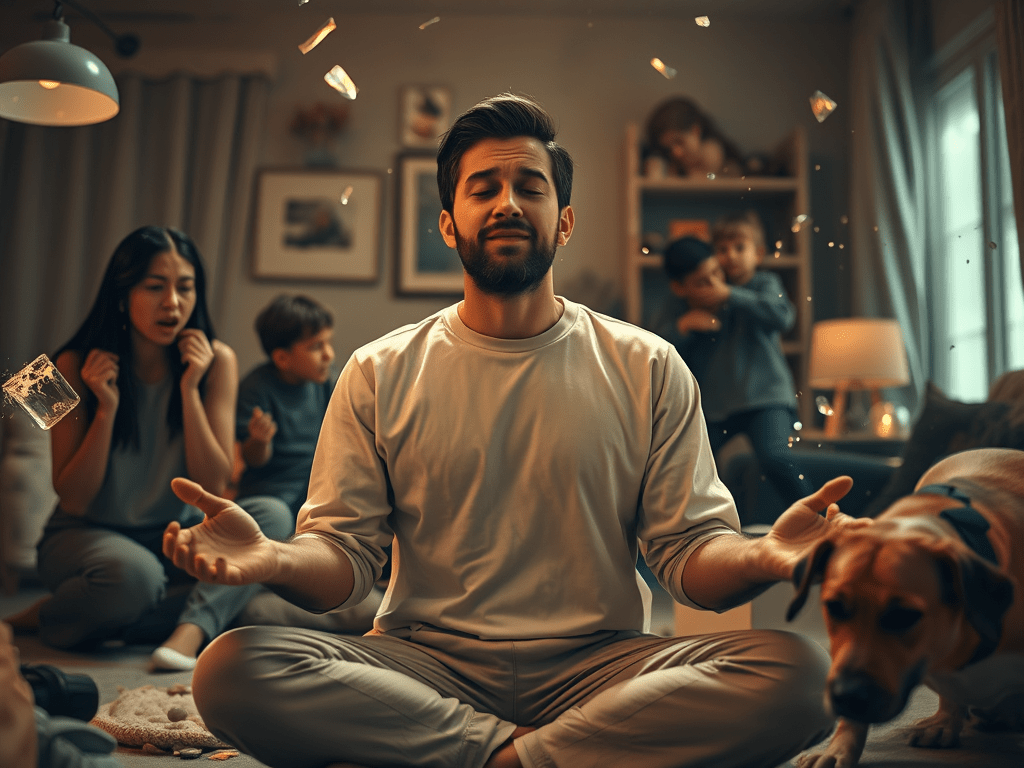
How to Manage Conflict: Science-Backed Strategies

Conflict is an inevitable part of life, and how we handle it determines our relationships, personal growth, and overall well-being. Neuroscience reveals that the brain is highly adaptable, allowing us to rewire our responses to stress, anger, and confrontation. Whether you’re in prison, struggling with emotional control, or seeking better ways to handle disputes, these ten science-backed techniques can help you regain control and improve conflict resolution skills.

1. Practice Mindful Breathing to Regulate the Amygdala

The amygdala, responsible for processing threats, often triggers impulsive reactions during conflict. Controlled breathing activates the parasympathetic nervous system, calming the amygdala and increasing rational thinking.

  • Hack: Try the 4-7-8 breathing method: Inhale for 4 seconds, hold for 7, exhale for 8. This reduces stress hormones and enhances emotional control.
  • Quote: “Between stimulus and response, there is a space. In that space is our power to choose our response.” —Viktor Frankl

2. Reframe Thoughts to Strengthen the Prefrontal Cortex

The prefrontal cortex governs reasoning and impulse control. Cognitive reappraisal techniques help shift negative perspectives and prevent aggressive responses.

  • Hack: Instead of thinking, “This person is attacking me,” reframe it as, “Maybe they’re struggling with something, and I can respond differently.”
  • Studies show cognitive reappraisal reduces aggression and fosters constructive conflict resolution.

3. Engage in Physical Exercise to Improve Emotional Regulation

Physical activity strengthens neural pathways related to impulse control and emotional stability, reducing reactive behavior.

  • Hack: Commit to daily exercise (push-ups, jogging, or stretching). It improves connectivity between the prefrontal cortex and amygdala, enhancing self-regulation.
  • Quote: “Exercise not only changes your body. It changes your mind, your attitude, and your mood.” —Unknown

4. Use Visualization to Train Neural Pathways

The brain responds to mental imagery as if it were a real experience. Visualizing calm, controlled responses to conflict strengthens positive neural circuits.

  • Hack: Spend 5 minutes daily visualizing past or potential conflicts and mentally rehearse responding with calm assertiveness.
  • Quote: “Neurons that fire together, wire together.” —Donald Hebb

5. Strengthen Social Bonds to Enhance Oxytocin Production

Oxytocin, the “bonding hormone,” increases trust and reduces aggression, making conflict resolution easier.

  • Hack: Engage in meaningful conversations, offer support, and participate in group activities to foster positive relationships.
  • Higher oxytocin levels promote empathy and emotional resilience, key for handling disputes constructively.

6. Implement a Delayed Response Strategy

Impulsivity in conflict often leads to regrettable actions. A short delay before reacting helps the brain shift from emotional to logical processing.

  • Hack: When emotions rise, count to 10 before responding. This brief pause gives the prefrontal cortex time to intervene.
  • Neuroscience research shows delaying responses significantly reduces aggressive behaviors.

7. Practice Gratitude to Shift Emotional Focus

Focusing on gratitude increases dopamine and serotonin levels, making it easier to maintain a positive perspective during conflicts.

  • Hack: Each day, list three things you’re grateful for. This rewires the brain to focus on solutions instead of problems.
  • Gratitude improves emotional regulation and decreases stress-related reactions.

8. Use Bilateral Stimulation to Soothe Emotional Triggers

Alternating stimulation of both sides of the brain (such as tapping or moving your eyes left to right) reduces emotional intensity.

  • Hack: When feeling overwhelmed, try bilateral tapping (tapping each knee alternately) to engage both hemispheres of the brain and calm the nervous system.
  • This technique is used in trauma therapy to help process emotional stress.

9. Practice Self-Compassion to Reduce Shame and Guilt

Harsh self-criticism increases stress hormones, leading to defensiveness in conflict. Self-compassion promotes emotional balance.

  • Hack: When making a mistake, speak to yourself as you would a friend, reinforcing positive self-talk.
  • Quote: “Talk to yourself like someone you love.” —Brené Brown

10. Prioritize Quality Sleep to Enhance Cognitive Control

Sleep deprivation impairs the brain’s ability to regulate emotions, making conflicts more intense and harder to resolve.

  • Hack: Aim for 7-9 hours of sleep per night. If sleep is difficult, establish a nighttime routine and limit stimulants before bed.
  • Well-rested individuals demonstrate better emotional regulation and decision-making skills.

Conclusion

Rewiring the brain for better conflict resolution isn’t about suppressing emotions—it’s about managing them effectively. By practicing mindful breathing, reframing thoughts, exercising, visualizing solutions, strengthening social bonds, delaying reactions, focusing on gratitude, using bilateral stimulation, practicing self-compassion, and prioritizing sleep, you can reshape your brain’s response to conflict. Neuroscience proves that with consistent effort, you can regain control and develop a healthier, more constructive approach to challenges.

Scholarly References

  1. Davidson, R. J., & McEwen, B. S. (2012). Social influences on neuroplasticity: Stress and interventions to promote well-being. Nature Neuroscience, 15(5), 689-695.
  2. Gross, J. J. (2015). Emotion regulation: Current status and future prospects. Psychological Inquiry, 26(1), 1-26.
  3. Hölzel, B. K., et al. (2011). Mindfulness practice leads to increases in regional brain gray matter density. Psychiatry Research: Neuroimaging, 191(1), 36-43.
  4. Ratey, J. J. (2008). Spark: The revolutionary new science of exercise and the brain. Little, Brown.
  5. Siegel, D. J. (2012). The developing mind: How relationships and the brain interact to shape who we are. Guilford Press.


Music and the mind


Music and the mind! A beautiful topic, just four words but having deep meaning and impact to the human soul. Music is so broad, with lots of genres. You can be a lover of instrumentals or acapella, whichever one you may prefer; they are all forms of music. It goes way back, even to the very beginning of human existence in times of war. Bringing happiness, sadness, calmness, and other emotions to the human mind and soul. Today, I’ll be talking about music and its relation to our minds as human beings. I personally have experienced a lot under the influence of music. Some were beautiful while some were sad. Before I tell you my personal experience, let me tell you how music could help your mind or preferably your mental health.


It helps you study

Classical music is the secret behind this. Usually having a frequency of 60bpm (beats per minute). It helps when studying, by allowing your brain reason at a faster rate. It’s worked for me numerous times, especially when dealing with a difficult course.


It helps you relax

Most people know this. You just got home from the day’s work. Nothing feels better than a good song to calm your mind and body.


It helps you express yourself

This has affected me personally; sometimes when I’m down I just listen to music. I found it easy to express my emotions even by writing. I have a friend who expresses herself by writing which was triggered by songs she listened to.


Boosts your creativity levels

Listening to music boosts your ability to be creative, especially if you are a writer or a painter. This could help if you have an unfinished project and lack inspiration to continue.


Helps motivate you

Sometimes when you want to dance, study or workout, music can serve as a means of motivation when you are feeling reluctant. All you need is the right track and you are good to go. This has helped me during workout sessions.


All these mentioned above are ways in which improves your mental health. Now, let me share a few experiences with you.


Music has impacted a lot to me. There have been times when I’m emotionally down, maybe due to daily activities or even a break up. At this point in my life, what I did was pick up my phone and listen to my favorite hip hop playlist. In just a few minutes, I was already up on my feet singing and dancing. This experience is an evidence of how music brought back that happiness I needed at that crucial moment of my life. Just like that, no counseling required, nothing just music and it felt magical. Also, as a writer, there were times I just lost it. There was no inspiration to write, I literally just went blank. I was confused and frustrated because I had to finish that project urgently, but nothing was coming. So, what did I do? At first, I tried reading, it didn’t work and felt like mental stress. Okay, so I decided to take a nap. When I woke up, I felt refreshed but still lacked the key inspiration needed to continue. Almost giving up, I unconsciously picked up my phone and started listening to few classical music and love songs. It may sound unbelievable but little by little, the inspiration started coming back. I was amazed and happy and continued with my writing. This is a life experience.  Even during my workout sessions, especially when I’m out jogging I love listening to hip hop or nice instrumentals that keep my groove going. It gives me all the motivation I need and makes me want to go on for hours.


So, what am I driving at with all these experiences? Just three words, MUSIC IS LIFE!

A world without music is unimaginable and undoubtedly boring. Trust me you wouldn’t want to be in that world. Most times, what music does to us can’t be explained; it can only be simply felt. As far as it makes you feel good, I’ll say you should keep listening. In fact, I have come to notice that most people who live or have a boring lifestyle either have a poor sense of music or don’t listen at all. There’s is even something called music therapy where music is used in hospitals to treat patients and aid recovery. Even in the aspect of psychology. So you see, music is everywhere and constantly part of us.


Make music a lifestyle today and experience the wonders and beauty it has to offer.

Feel the beat and enjoy the rhythm.

Written By Kalu FaithIMG_20170404_140453_230 (1)


Roller Derby-You Go To Practice

You go to practice. You go to practice and wobble out onto the track. You wobble out onto the track wearing skates that are a size too big for you, a fact you won’t know until two years later when you buy new ones. You go to practice. You go to practice even though you can’t do T-stops, even though you can only skate 27 laps in five minutes, even though you have no idea what people mean when they talk about “getting a goat.” You go to practice even though you have no friends there. You shop for knee socks and go to practice.

You go to practice on a former ice-skating rink with an uneven floor in a dilapidated park district building. You go to practice in an abandoned store in a shopping mall. You go to practice in a skating rink with rain coming through the roof, with overflowing toilets, with fountains spewing toxic-tasting water and a cotton candy machine that produces a sickening smell on the weekends. You go to practice and do pace lines and pack drills and hitting exercises. You go to practice and work on endurance and communication, and you try to master the basic skills. You go to practice and wonder if you’re getting sick or are just out of shape. Still. You go to practice and pass your 27 in 5.

You go to practice and fall on your tailbone while scrimmaging. You go to practice and fall, shaving the skin off where your thigh connects to the floor. You go to practice and shave the skin off in the exact same spot on the other thigh. You go practice because for some reason you feel like you should go to practice, even though you mostly suck and are afraid you will have to jam. You are not sure you even like this roller derby thing. You go to practice and picture yourself coming out of practice on a stretcher. You wonder who on your league can drive stick shift to get your car home.

You go to practice at a hockey rink off a terribly trafficked highway exit with a delicious floor and air conditioning. You know your skates suck now but you keep going to practice. More things are starting to make sense. You go to practice and see someone break an ankle, the first of several ankle breaks you will witness over the coming years. The ambulance drives off and you keep practicing.

One day you go to practice and get a concussion. You miss a few practices, which helps you realize you might enjoy practice more than you thought you did. That it might be something sort of essential about your life now. You go to practice and start to feel a little more comfortable when someone hands you the jammer panty. At least it doesn’t fill you with dread. It might even be fun sometimes.

You finally get new skates and they hurt so much you want to cry at practice. You get cramps so bad you have to stop skating and physically bend your feet out of a claw position. Maybe you do cry. You wonder if you will ever be even sort of good at derby again. You go to practice. You bout. You go to practice. You bout. You go to meetings. You go to practice.

During your third year, your league gives you an award at the end-of-season party, which shocks and humbles you. You put the award in a frame and go to practice. The days in which you imagine leaving practice on a stretcher have become few and far between.

You go to practice because your friends will be there. You go because you never know if something might click that time. You might do something good. You go because there might be beers afterward. You go because it speeds the workweek along to the weekend. You go to practice to prepare for a bout. You go after a bout, too, to work on the deficiencies that made you lose or maybe to try to capture those things that helped you win, to grab onto them before they slip away. You are dog-tired, but you go to practice.

When your boyfriend dumps you, you go to practice. You go to practice even though you might cry at practice. Then you go to practice because it’s the only place you don’t cry. It seems possible that you can sweat out the bad thing inside you. You skate like the world is ending.

You go to practice even when you don’t want to go to practice. Derby has taken over your life and you wonder if there will ever be a time where you don’t have to go to practice. And sometimes you don’t go. Sometimes you want to stop the feeling of being caught in an endless roundelay of practice, practice, practice. So you just tell yourself: fuck it. You work late. You go to the bar. You lay around your apartment in your underwear, reading magazines and watching serial dramas on your laptop. You go back to practice.

You go to practice because there’s no one waiting for you at home. Or maybe you go to practice because someone is waiting for you at home. You go to practice because what the hell did you do with all your free time before you went to practice? You go to practice because you feel like hitting someone. You go to practice because you feel like being hit. No one asked you to do anything else so you go. Someone asked you do something you’d rather do, but still you go to practice. You go to practice because you’re hungry to practice. You go to practice because you’re never going to be any younger than you are right now. Because your body isn’t broken yet or because it isn’t broken anymore. You go because it’s hard to imagine life before there was going to practice. You go to practice because you want to feel like you’re flying. Over and over again.

You go to practice, you go to practice. Because that’s what you do.


Written By:  Unknown

Welcome to Dark Tales of Understanding

A website for those needing a light at the end of the tunnel.  We are just building out site and updating daily with Articles.  If you want to read about something in particular send us an email at darktalesofunderstanding@gmail.com.  We welcome Guest Bloggers so please email us for open topics.  We also have a Dawn of Darkness Advice Column so email your questions for a chance to be featured in our weekly Column! Thanks for visiting!  Please leave a comment and again we are slowly building the site so there is so much more to come!